
ManeColourBarThe colourist’s app · iPad

Every gram, accounted for.

An app for the person at the bar, not the person at the desk. The iPad sits by the scale, the bowl fills in your shade’s real colour, and what you actually used becomes what the client actually pays.
Join the waitlistHow a bowl works

It tells you when to slow down, and confirms when you’re on target. Over-pour happens. It’s still weighed, still costed.
Weighing a shade on the scale: the bowl fills, the readout turns green on target, and keeps counting when you go over
How a bowl works

Four steps at the bar. Nothing written down twice.

The colourist never leaves the bench and never opens the calendar. By the time the bowl is mixed, the client’s ticket already knows what it cost.

STEP 01
Pick the client

Straight off today’s schedule. It’s the same appointment the calendar holds, so the bowl is attached to a real service rather than a note.

STEP 02
Choose the shades

Your brands, your lines, your shades, with the line’s mix ratio and processing time already known. Or pull their last formula and remix it.

STEP 03
Set the amounts

20 g of colour at 1:2 and the developer is worked out for you: 40 g, 60 g total. The percentage is validated, not typed hopefully.

STEP 04
Weigh it live

The scale streams to the iPad. Grams become dollars on their ticket, the formula saves to their history, and stock comes down by what left the tube.
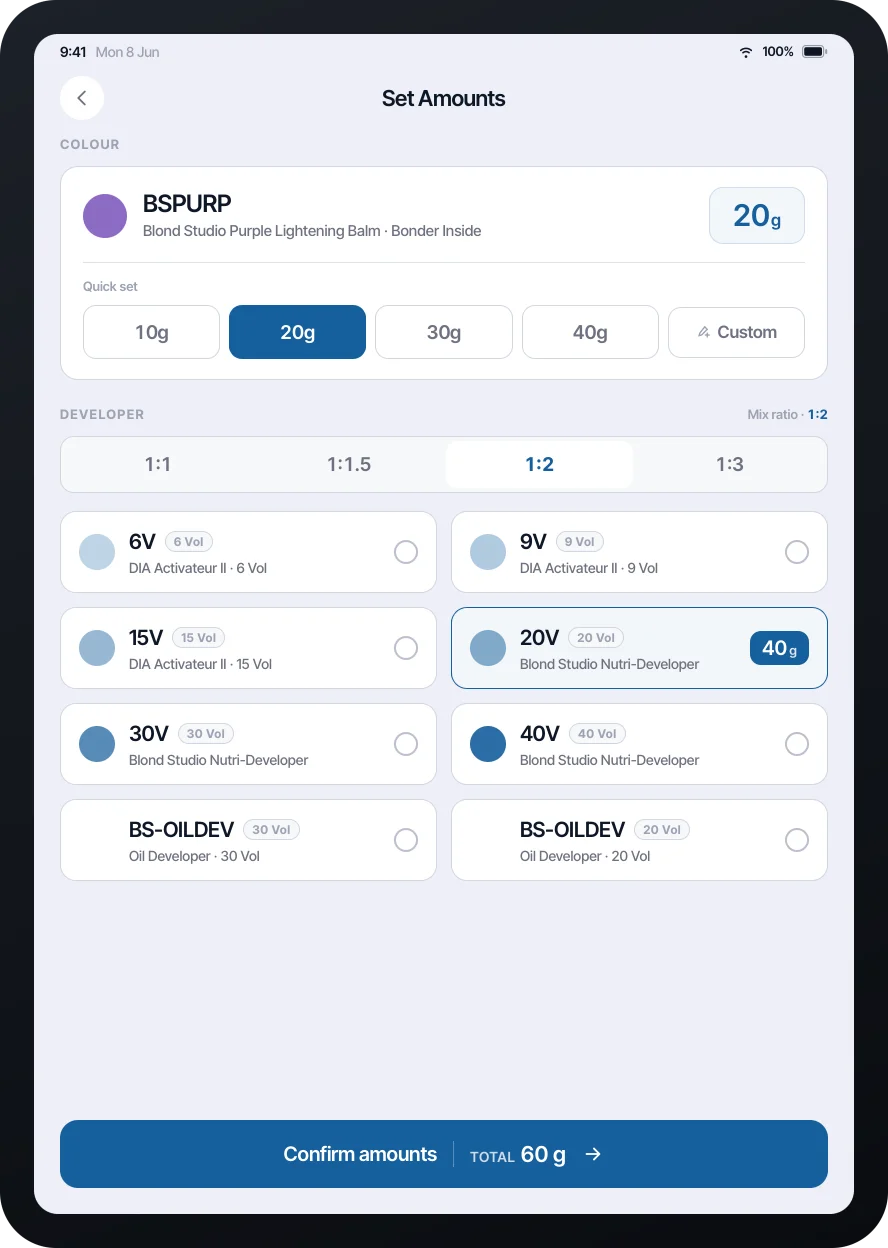
Set Amounts: 20 g of BSPURP at a 1:2 ratio, with 40 g of 20 Vol developer computed and a 60 g total
Set Amounts. Pick the grams, pick the ratio, and the developer follows.
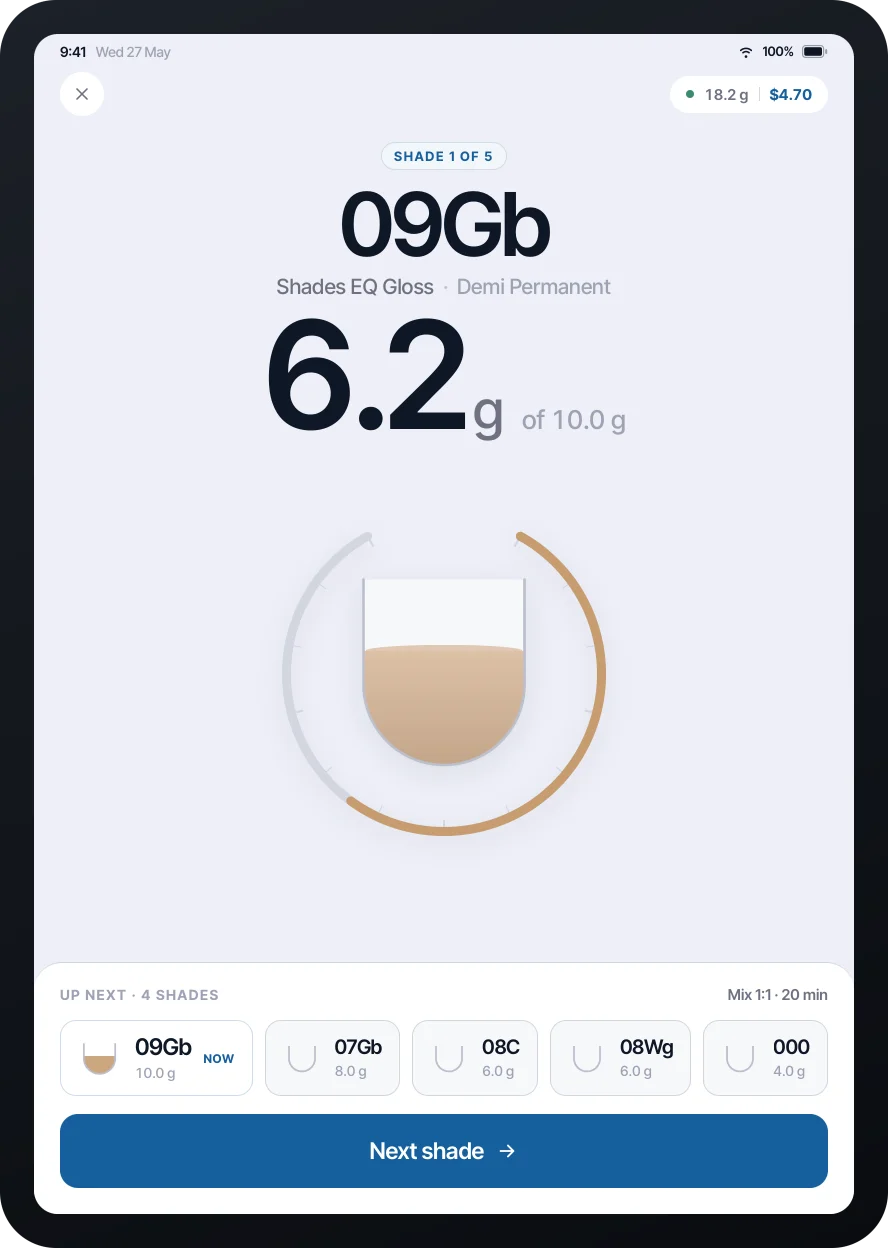
Weighing a shade: 6.2 g of a 10.0 g target, the bowl filling in the shade’s real colour
The bowl fills in the shade’s real colour, shade one of five, with the running cost in the corner.
Why it exists

Colour is your second-largest cost and the one nobody measures.

Most salons charge colour as a flat line on a menu and mix by eye. The difference between what the client is charged and what went in the bowl is absorbed silently, service after service. It never shows up in a report, because nothing ever recorded it.

Weigh it, and the allowance becomes a budget you can actually see against.

Charge for what you used

A long, thick head of hair costs more to colour than a short one. The ticket can finally say so, in a way the client can see is fair.

See what goes down the sink

Mixed, minus what’s left, equals what you actually used. Over-mixing becomes visible per stylist, which makes it coachable rather than accusatory.

Stock that counts itself

Every gram weighed comes off the tube. Reorder points stop being a guess made on a Sunday night.
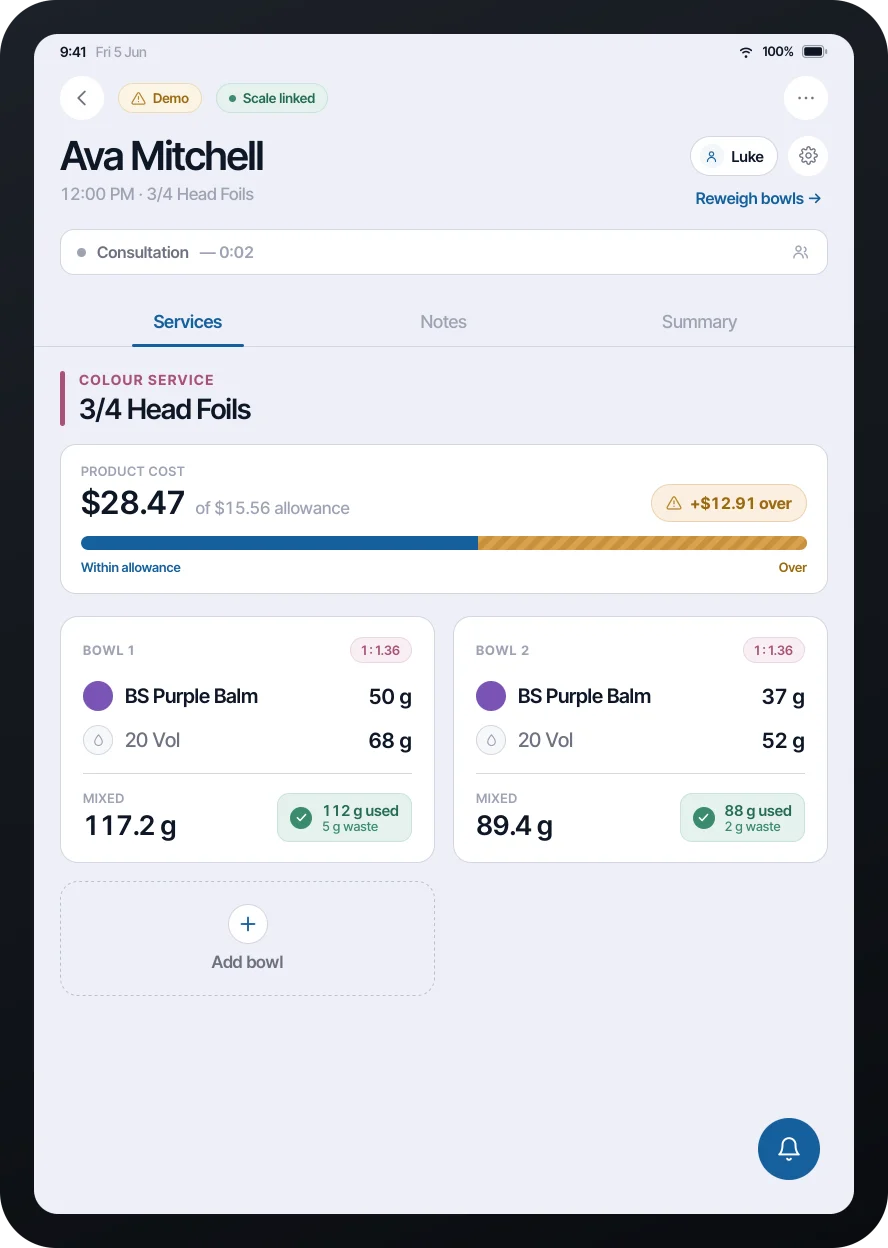
Service detail: product cost of $28.47 against a $15.56 allowance, over by $12.91, with two bowls and their waste
The allowance as a budget meter. Cobalt is what’s inside it, gold is what went over, per service.
After the service

Mixed, minus what’s left, equals what you used.

The bowl goes back on the scale at the end. Whatever is still in it comes off the client’s cost and lands in the waste figure instead, so the number is the truth rather than an estimate.
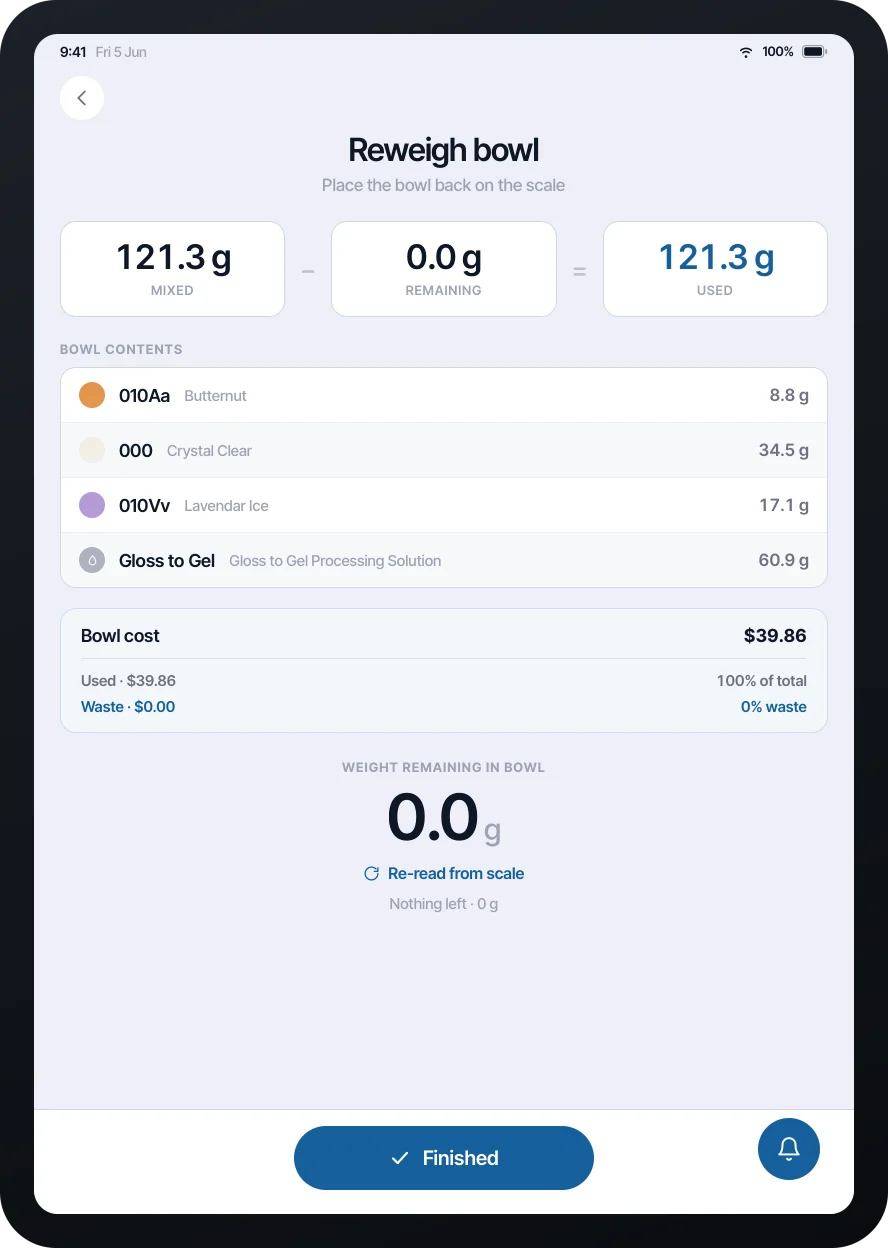
Reweigh result: 121.3 g mixed minus 0.0 g remaining equals 121.3 g used, bowl cost $39.86 with 0% waste
Reweigh. Bowl cost, what was used, and the waste percentage, itemised by shade.
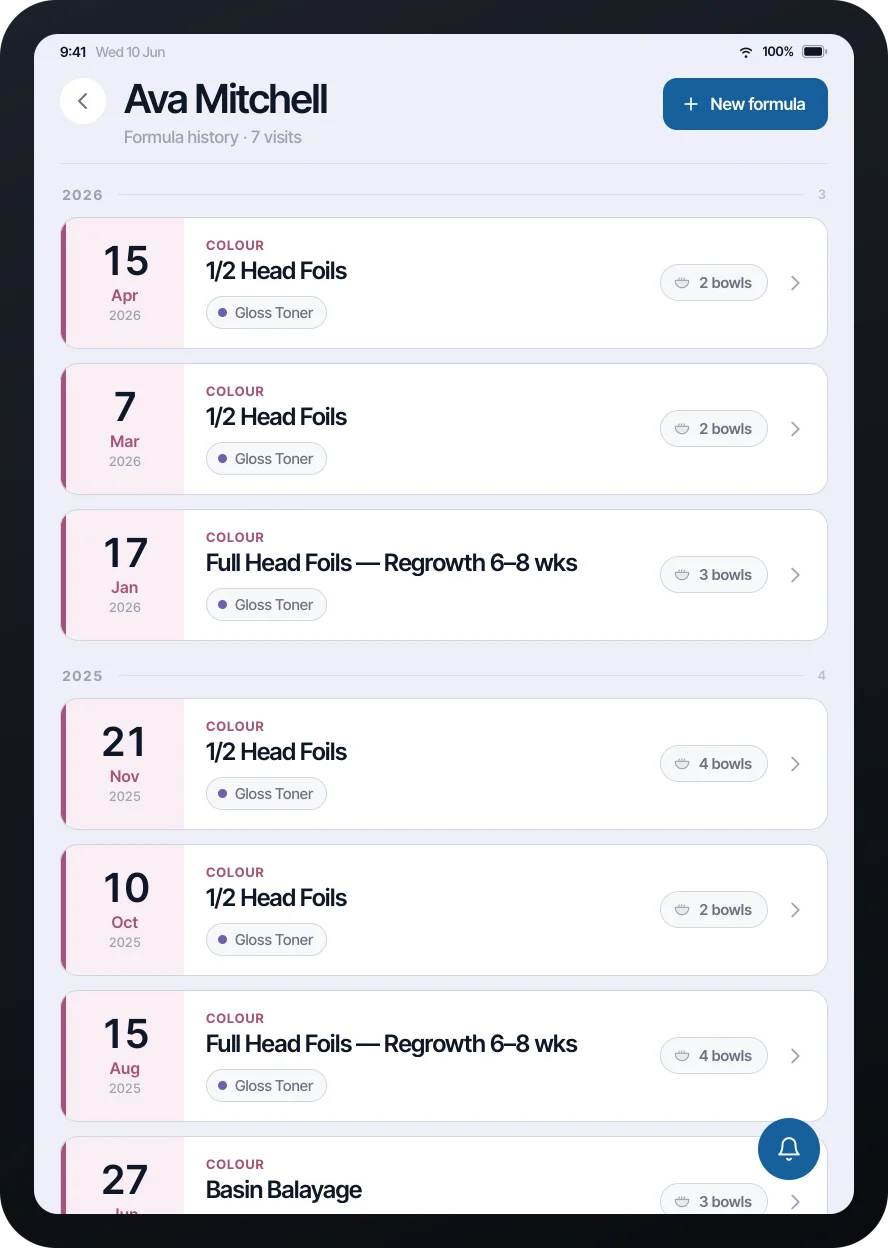
Formula history for a client, grouped by year, each visit showing its services and bowl count
Every formula they have ever had, by year. Any stylist can reproduce their colour, exactly.
Built for the bench

Details you only think of after seventeen years of mixing.

Development timers

Per bowl, not per stylist’s memory. Visible from across the room, and on the calendar tile too.

Mix more, mid-service

Ran short halfway through? Top up at the same ratio and it joins the same ticket, not a second one.

A mixer PIN

Shared iPad, attributable bowls. Whoever mixed it is on it, without anyone logging in and out all day.

The noticeboard

“Last of the 9.1. Order it.” Notes left against a shade, where the next person mixing will see them.

Setting a processing timer for a client’s service, with durations from 10 to 60 minutes and 30 selected
A development timer belongs to the bowl, so it follows the client rather than the person who set it.
Across the salon

One screen for every live bowl.

The bar is shared, so the monitor is too. Every bowl in progress, what’s in it, who mixed it and how long it has been sitting, next to the day’s columns.
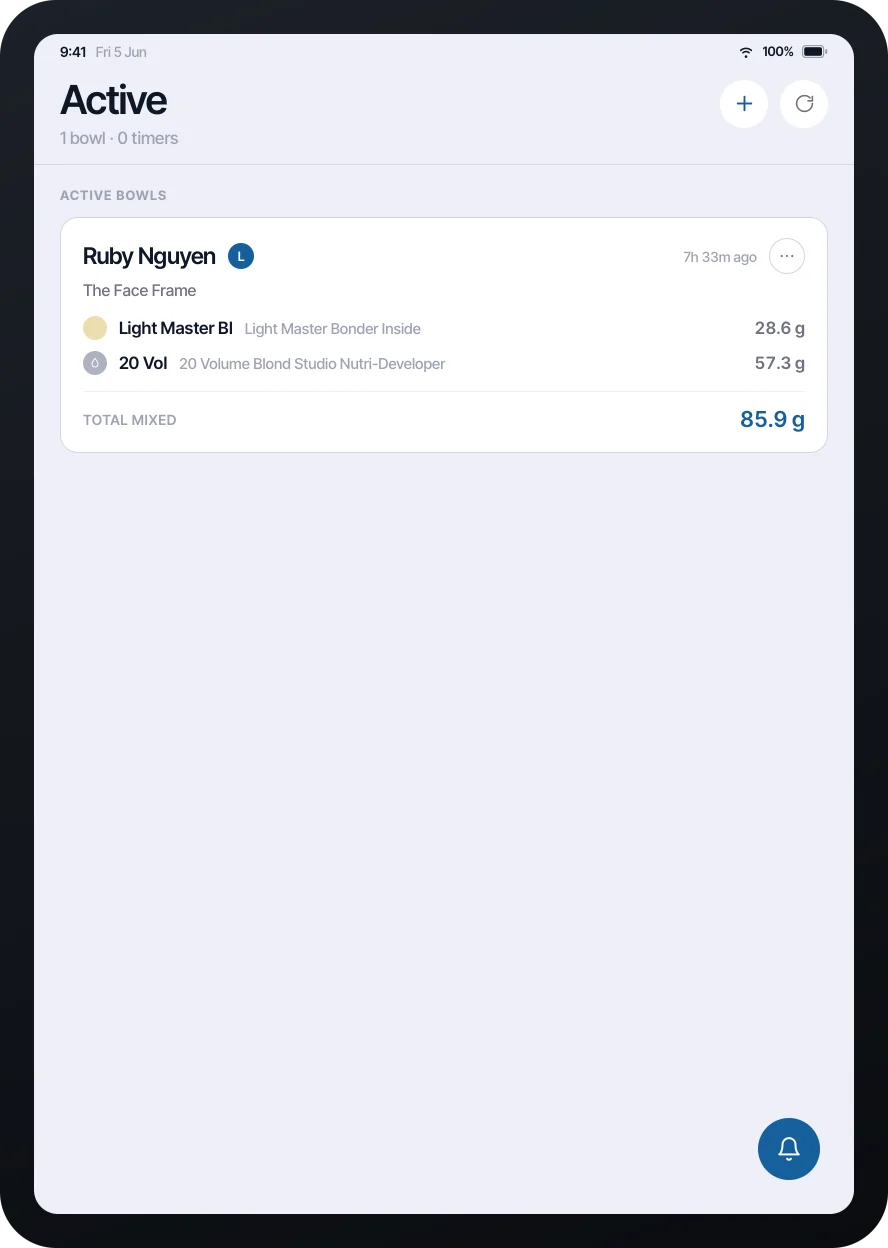
Active bowls: one live bowl with its shades, developer and total mixed weight, and how long ago it was mixed
Active bowls, salon-wide, with what is in each one.
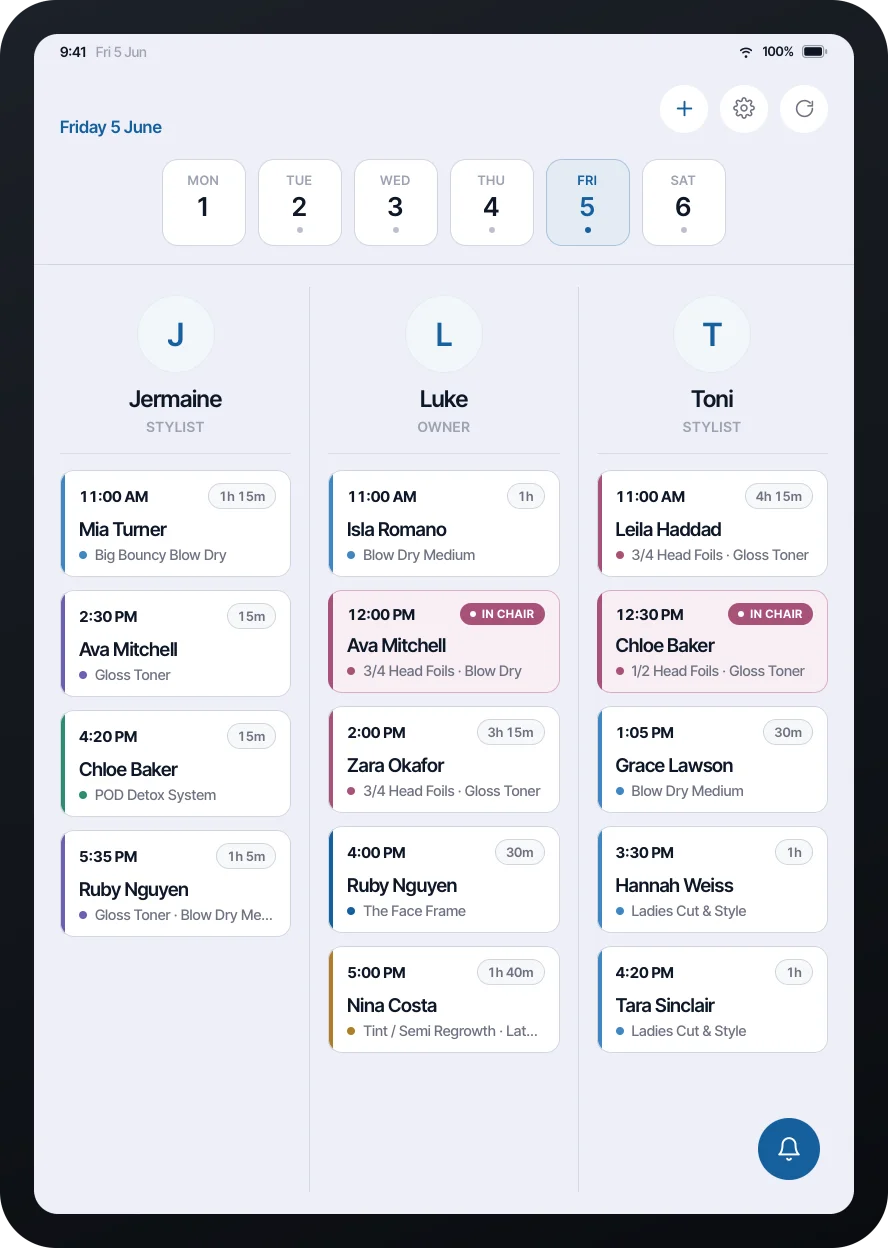
Day schedule with a column per stylist, colour-coded services and clients marked as in chair
The same day the calendar holds, with the colour services flagged and who is in the chair.

An add-on that pays for itself.

ManeColourBar is an add-on to ManeOS, priced well under the standalone colour-management systems on the market. Unlike them, it already knows your calendar, your service menu and your till. Most salons find the colour it stops wasting covers it.

Join the waitlistAsk a question